Showing posts with label Film Review. Show all posts

Thursday, 1 February 2018

Film Review - Psycho

Psycho is a 1960 horror-thriller hybrid directed by Alfred Hitchcock. The story start off by following the 'heroine', Marion Crane, who steals some money and runs with it, planning to reunite with her boyfriend in another town. However, Marion never makes it to her destination as she is murdered in a hotel room, and the rest of the movie is spent trying to figure out where Marion is and who murdered her.
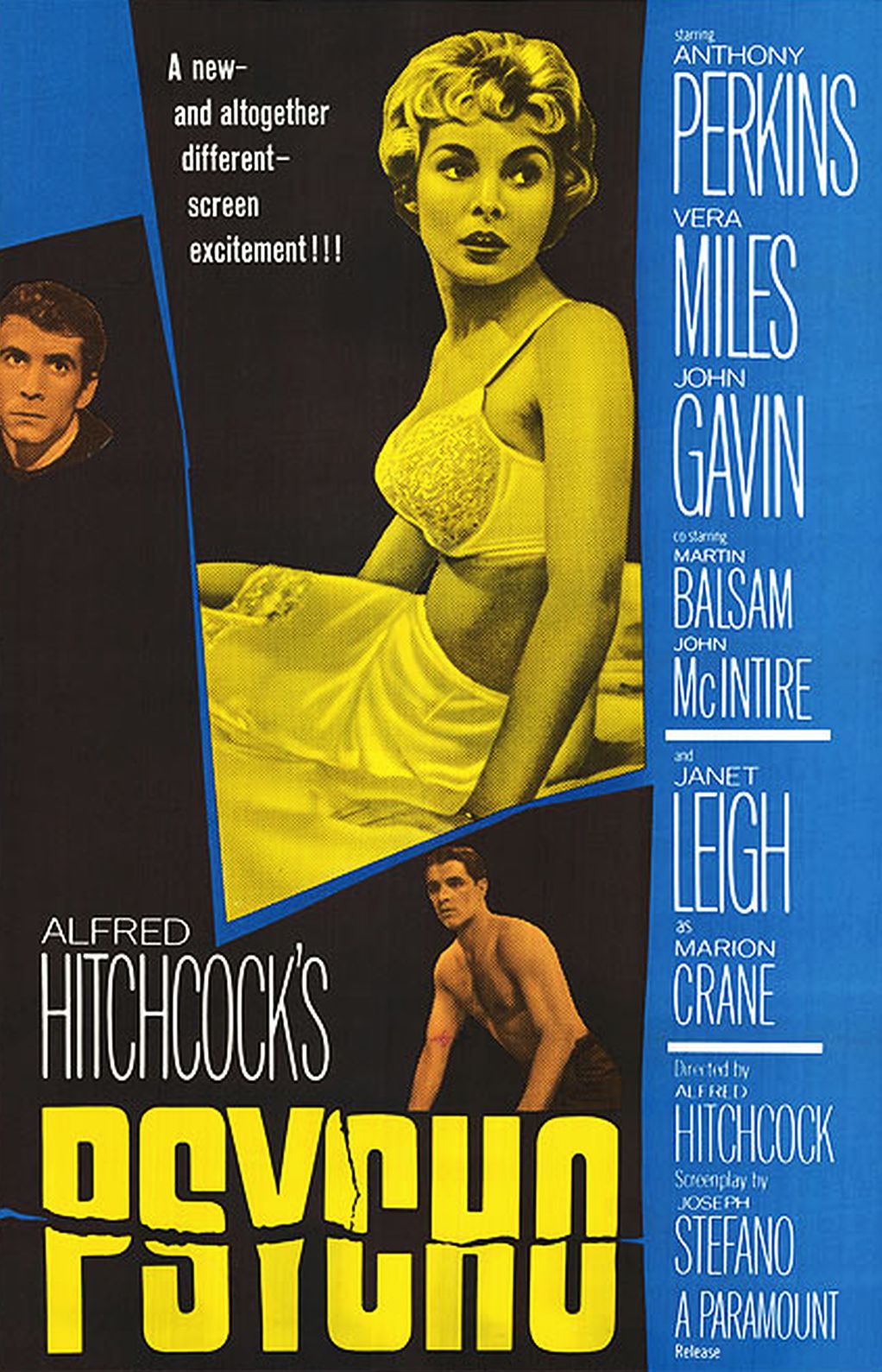
Fig. 1
One of the most interesting features of Psycho is that "Hitchcock's care with the scenes and dialog persuades us that Norman and Marion will be players for the rest of the film." (Ebert, 1998). However, 45 minutes into the film, our protagonist is killed off, leaving the viewer disorientated and confused. After following the story of this woman for nearly an hour, the direction that the film is going in drastically changes, which is what Hitchcock planned all along.

Fig. 2
Hitchcock's tactic for this film seems to be "slow buildups to sudden shocks" (Crowther, 1960), which works effectively, and is assisted by the use of camera shots. There are some masterful shots hidden in Psycho, like one particular scene where a private investigator is questioning Norman, and the camera focuses in on his neck. Using this shot really shows Norman's vulnerability and nervousness at being questioned because he is hiding the truth from the investigator. Hitchcock really focuses on where the camera is pointing and why, and this really pays off throughout the film.

Fig. 3
Not only are the camera shots something to focus on in Psycho, the music is celebrated also. The "stabbing string score" (Monahan, 2015) in the shower scene where Marion is killed unsettles the viewer and frightens them, even though there aren't actually any real signs of violence: the knife never makes contact with Marion's body, there isn't much blood, and there is never any sign of real wounds. This scene is iconic in the way it portrays the murder with no real violence, but terrifying music that leaves the audience on the edge of their seats.
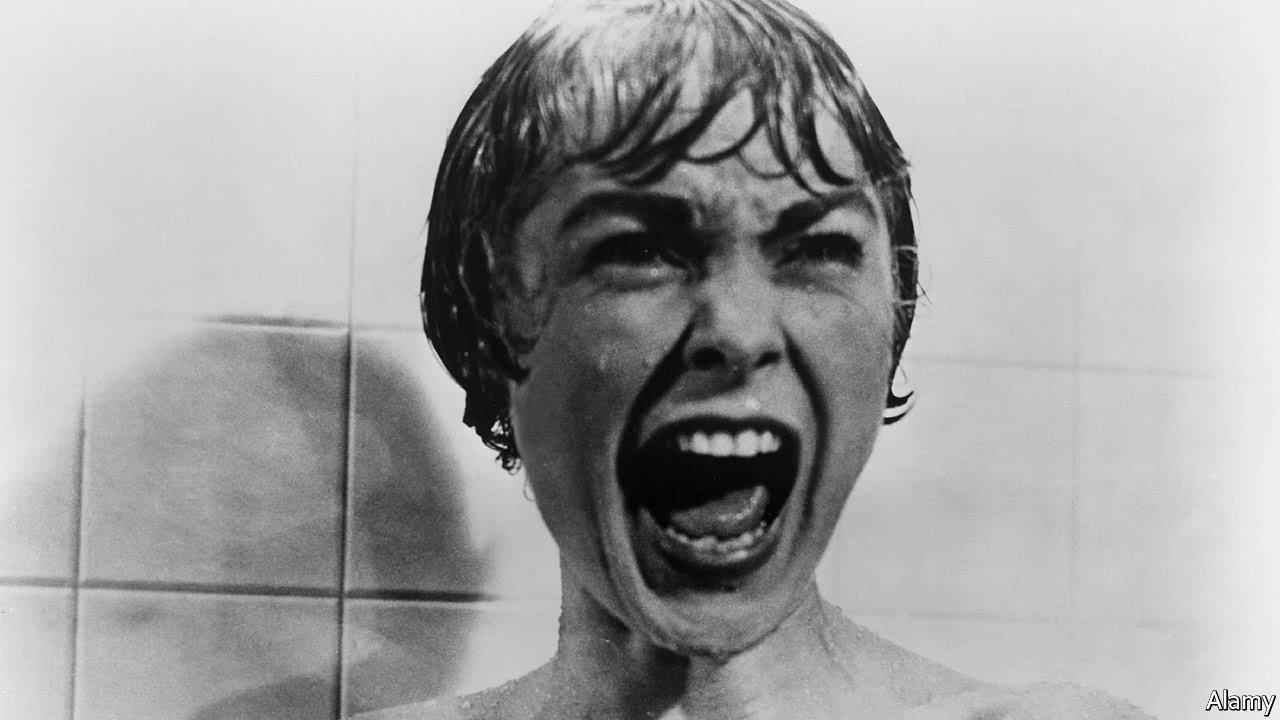
Fig. 4
In conclusion, the making of Psycho has obviously been thought out very thoroughly, from the story, to the camera, and to the music. Hitchcock has made a stunning adaptation of Robert Bloch's original book that has been celebrated over the years.


Bibliography
Crowther, B (1960). "Psycho" in The New York Times [online]. Available at: http://www.nytimes.com/movie/review?res=EE05E7DF173DE273BC4F52DFB066838B679EDE
Ebert, R (1998) "Psycho" in Roger Ebert [online]. Available at: https://www.rogerebert.com/reviews/great-movie-psycho-1960
Monahan, M (2015) "Psycho, review" in The Telegraph [online]. Available at: http://www.telegraph.co.uk/culture/film/filmreviews/11025424/Psycho-review.html

Illustration List
Fig. 1 - https://johneaves.files.wordpress.com/2013/03/psycho-theatrical-release-poster-1960.jpg
Fig. 2 - http://www.coolimba.com/engine/static/articles/48-huge-mistakes-no-one-ever-noticed-in-major-movies-ge-bho/images/police_officer_marion_driving.jpg
Fig. 3 - https://blogger.googleusercontent.com/img/b/R29vZ2xl/AVvXsEgS9sahprCcFLRhBr3mCR02PfV4VQ7BSWk2qBMwI-HM4hkpPyf1BnubTEurdeFs-ucLj6Y9xYs1aIwcOhO-OYPWT-J2gVQJf7TbvlWdZQkgcVCLi3mMr-WC9YUehDRnSM0rmCtvyqFE6mvb/s1600/Psycho+7+Jaw.jpg
Fig. 4 - https://cdn.static-economist.com/sites/default/files/20171104_BKP509.jpg

Friday, 12 January 2018

Film Review - La Jetée

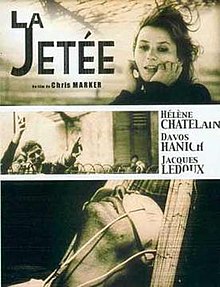
Le Jetée, made in 1962 by Chris Marker, is a very matter-of-fact film about time travel, told through picture instead of animation. Although it may not look like much to a modern audience, the film has been a large influence in movie culture, inspiring many other films after it, like Back to The Future or Star Trek.

Fig. 1
Like a moving storyboard, Marker only uses the essential pictures to tell his story. The lack of movement can be disconcerting at first, but as the film progresses it is obvious that the photographs are just a unique, creative way of telling a remarkable story. Unlocking the "poetic possibilities" (Scott, 2012) of time travel was essential to the short film's success, and gave it the influence it still has on other film makers today.

Fig. 2
The sound is La Jetée is utilised well to enhance the pictures on the screen. "The film uses sound and visuals together to explore the concept of movement" (Ignoramus, 2018). Despite not having any movement in the movie (apart from in one short scene), La Jetée doesn't come across as being unfinished, or having anything missing. The audience begins to get used to the new format, and can almost fill in the gaps themselves. The sound helps incredibly with this. When in an underground scene where the main character is being used as a guinea pig for time travel, the harsh whispers in the background makes the picture seem even more alive, almost as if you were standing in the scene yourself.
Not only are the photographs and sound remarkable in the film, but the story is also inspiring, and creates "meaning and an emotional connection" (Buchman, 2015) to the main character. The twist at the end is poignant to the audience, and leaves them thoughtful, perhaps sad for the time traveller. La Jetée is a well thought out and delicate film that uses unconventional methods to make a story come to life.

Fig. 3

Bibliography
Buchman, M (2015). "Classic Films: La Jetée" in Nerdist [online]. Available at: https://nerdist.com/classic-films-la-jetee/
Ignoramus, L (2018). "Chris Marker’s La Jetée Analysis: Mortality and the Illusion of Time" [online]. Available at: http://filmslie.com/chris-marker-la-jetee-analysis-temporality/
Scott, A (2012). "What ‘Back to the Future’ and ‘Terminator’ Owe to ‘La Jetée’" in The New York Times [online]. Available at: http://www.nytimes.com/2012/09/30/magazine/la-jetee.html

Illustration List
Fig. 1 - https://upload.wikimedia.org/wikipedia/en/thumb/f/f7/La_Jetee_Poster.jpg/220px-La_Jetee_Poster.jpg
Fig. 2 - https://nerdist.com/wp-content/uploads/2015/09/lajetee6_090515.jpg
Fig. 3 - https://wolfmanscultfilmclub.files.wordpress.com/2017/04/la-jetc3a9e-1962-man-and-woman-the-jetty-airport.jpg?w=1100

Thursday, 11 January 2018

Film Review - Suspiria

Suspiria is a 1977 horror film, directed by Dario Argento. It follows a young dancer as she moves to Germany to go to the most acclaimed dancing school there. However, she finds out that something sinister is happening underneath the seemingly perfect façade.

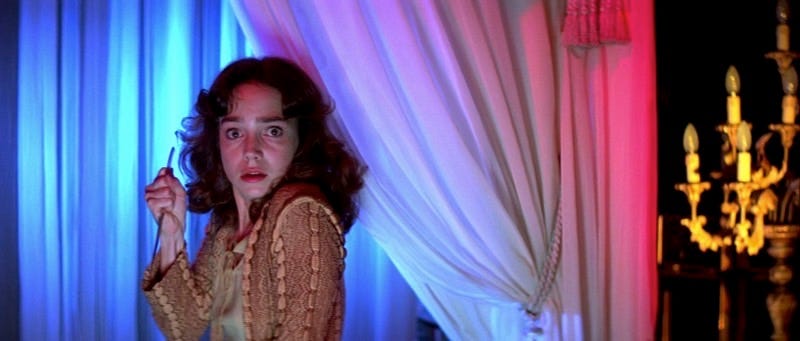
Right from the beginning of the film, Argento makes the audience feel uneasy about what the audience is about to get into. As soon as the main character, Suzy, arrives at the airport, there is a fascinating scene where it switches between her in the airport, which features normal, everyday music, to the outside, where it is pouring down with rain and a far more alarming soundtrack is played: Argento's "own rock score (all dissonance and heavy-breathing) blasts out in stereo" (SM, no date). This foreshadowing of what is to come is so simple and subtle, but already sets the tone for the film.

Fig. 1
The use of colour in Suspiria can only be described as making the film even more "unique, surreal, [and] hyper-intense" (Smith, 2000). The vivid red is everywhere, spelling out danger ahead. The colours are strong and unapologetic, and even though they are so unrealistic, it still fits well into the film overall. Along with the deafening rock metal track and the bright colours splashed across the screen, Suspiria is certainly a unique film in the way it has been pieced together.

Fig. 2
Although Argento kills off many women in the film, which some argue is misogynistic, he also creates a heroine, which is perhaps his redeeming feature. "The character of Suzy is initially seen as hopelessly naive, but grows to become a strong, capable person." (Ebert, 2017). For a film made in 1977, it shows a very intelligent female lead, who ultimately cracks the case on the secret behind the dancing school.

Fig. 3

Bibliography
Ebert, R (2017). ""Do You Know Anything About Witches?" "Suspiria" at 40" in Roger Ebert [online]. Available at: https://www.rogerebert.com/balder-and-dash/do-you-know-anything-about-witches-suspiria-at-40
Smith, A (2000). "Suspiria Review" in Empire [online]. Available at: https://www.empireonline.com/movies/suspiria/review/
SM, (no date). "Suspiria" in Time Out [online]. Available at: https://www.timeout.com/london/film/suspiria

Illustration List
Fig. 1 - https://blogger.googleusercontent.com/img/b/R29vZ2xl/AVvXsEiAy-8ZWQ20gQcar3zq1s5j-4wMV0sXJ6CByb1rxVdCV5XOqZMd0YQp7wvBLHhSg1KVNpC9x9HVGPYx1Rt9SMDg1bBZYVrFfnWVA8khQXn_JOV4A6SM1UWcDF9sP97gSMbnRlWv_JzGWEE/s1600/suspiria2.png
Fig. 2 - https://filmgrimoire.files.wordpress.com/2015/02/suspiria-214.jpg
Fig. 3 - https://i.kinja-img.com/gawker-media/image/upload/s--KtBhO-67--/c_scale,fl_progressive,q_80,w_800/mq7objrqlxbxzd9zxkwz.jpg

Film Review - Repulsion

Repulsion was made in 1965 by Roman Polanski. It features a young woman descending into madness in her flat and also shows her repressed fear of men and their sexual advances. The surreal design in the film helps the audience to understand Carol and her hallucinations, and also helps the viewer to see the decaying state of her mental health as the days pass.

Fig. 1
From the very start of the film, the audience can see that Carol's mental state may not be very stable. As the story progresses and her sister leaves on holiday, isolating Carol in her flat, Polanski creates distinct parallels between "the decay of her mind with the rotting of a rabbit she intended to cook but has just left out on the sideboard." (Newman, 2015). This image helps to show the time passing in the flat, as well as how Carol's hallucinations gradually get worse and lead her into a deep madness.

Fig. 2
Along with the strong images Polanski uses to show the gradual passing of time, he also employs sound to emphasize Carol's madness and make the audience feel uneasy. Many examples include "the ticking of a clock, the voices of nuns playing catch in the convent garden, the dripping of a faucet." (Morgan, 2011). This is the only connection that Carol has to the real world, and this helps Polanski to fashion a bubble of isolation that both Carol and the audience are trapped in.

The idea of Carol murdering two, probably strong, men is a progressive one. Despite being a woman Polanski has no problem with transforming Carol into a deranged and dangerous person, who seriously harms the men who "unwittingly invade" (Crowther, 1965) her flat. The invasion of the men into her personal space, like her suitor literally breaking the door down the get to her, is very telling of how the world once worked in the way of gender equality. The men intruding is something Carol doesn't want, and this is probably relatable to a lot of women. The fact that these men so brazenly disrespect Carol's space could be a big driving force behind her murdering them.

Fig. 3

Bibliography
Crowther, B (1965). "Repulsion" in The New York Times [online]. Available at: http://www.nytimes.com/movie/review?res=ee05e7df1739e471bc4c53dfb667838e679ede
Morgan, K (2009). "Roman Polanski Understands Women: Repulsion" in Huffington Post [online]. Available at: https://www.huffingtonpost.com/kim-morgan/roman-polanski-understand_b_301292.html
Newman, K (2015) "Repulsion Review" in Empire [online]. Available at: https://www.empireonline.com/movies/repulsion/review/

Illustration List
Fig. 1 - https://upload.wikimedia.org/wikipedia/en/8/89/Repulsion_%281965_film_poster%29.jpg
Fig. 2 - http://www.thingswewatch.com/wordpress/wp-content/uploads/2016/03/repulsion1_tww.jpg
Fig. 3 - https://medialifecrisis.com/files/images/articles/201509-Popgap/Repulsion-1965/Repulsion-1965-01-08-34.jpg

Film Review - The Shining

The Shining is a classic horror film made in 1980 by Stanley Kubrick. The story covers Jack who takes his family to the Overlook Hotel in the isolated mountains over winter. However things soon become less than ideal when Jack begins to let madness take over, and very soon his wife and son are in danger.

Fig. 1
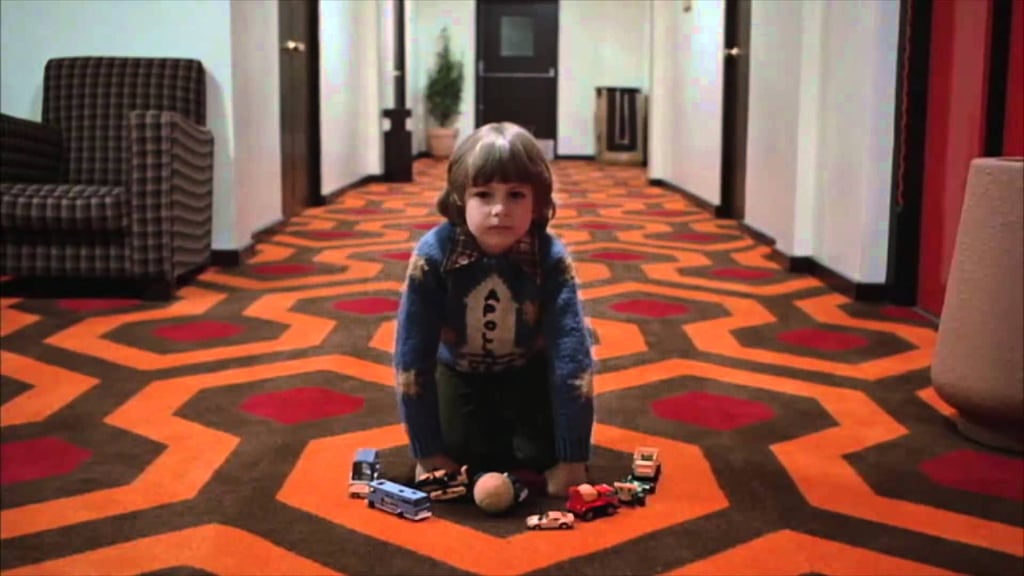
Described as "deeply scary and strange" (Bradshaw, 2012), Kubrick really makes the most out of every shot taken in the film, and one of the most effective ways in which he does this is through the set design. Patterns, especially on the floor, are everywhere. Kubrick obviously thinks deeply about his set and creates these patterns to perfectly frame a shot or to change a mood. One of the most interesting uses of this is where Danny, Jack's son, is playing with his model cars on the carpet, and the lines from the carpet are almost wrapped around him, making him look even smaller and more vulnerable than he already is.

Fig. 2
Not only does the set convey the feeling that something isn't quite right in the film, but "the actors themselves vibrate with unease" (Ebert, 2006). This is partly due to the fact that Kubrick would make the actors do take after take for just one scene, until it was perfect and exactly how he wanted it. The toll this must have taken on the actors is obvious, especially when you're recording the same thing for months on end. The anger portrayed in the film could very well be real anger, and the tears could be real tears. Kubrick really pushed his actors to the edge to create The Shining, tormenting them in their own way, possibly to make the characters even more believable than they would otherwise be.

Fig. 3
The use of sound in The Shining also sets the audience on edge. A review states that "The Shining may be the first movie that ever made its audience jump with a title that simply says "Tuesday."'"(Maslin, 1980) Kubrick really pushes the sound, and this sucks the viewer into the film, engages them, and most of all, scares them. Even simple sounds, like Danny riding his tricycle on the carpet and then changing to the wooden floor, can make you jump. Kubrick has perfectly orchestrated sound and picture with such precision to captivate the audience, and to make the horror of the film even more believable.

Bibliography
Bradshaw, P (2012). "The Shining - review" in The Guardian [online]. Available at: https://www.theguardian.com/film/2012/nov/01/the-shining-review
Ebert, R (2006). "The Shining" in Roger Ebert [online]. Available at: https://www.rogerebert.com/reviews/great-movie-the-shining-1980
Maslin, J (1980). "The Shining" in The New York Times [online]. Available at: http://www.nytimes.com/movie/review?res=EE05E7DF1738E270BC4B51DFB366838B699EDE

Illustration List
Fig. 1 - https://static1.squarespace.com/static/5262aa63e4b0fe976f8d0490/53f10697e4b097fb5ada11b1/53f10697e4b097fb5ada11b4/1408304811722/shining_ver1_xlg.jpg
Fig. 2 - https://media1.popsugar-assets.com/files/thumbor/Ffvu6C-mPurTZBQnI_cPu8u3y2E/fit-in/1024x1024/filters:format_auto-!!-:strip_icc-!!-/2015/10/08/831/n/1922283/91691e258478e6c9_maxresdefault_copy/i/very-similar-Shining.jpg
Fig. 3 - http://dl9fvu4r30qs1.cloudfront.net/0e/a4/f2f7f87042b39ae684bef302a61a/the-shining.jpg

Monday, 4 December 2017

Film Review - Black Narcissus

Black Narcissus was made in 1947 by Michael Powell. The story focuses on a group of Anglican nuns who travel to the Himalayas to start a convent. However, this plan fails spectacularly, and instead of them having an effect on the environment, the environment has a profound effect on them. Black Narcissus highlights the power of isolation and how it can create emotional turmoil in certain characters. The environment in the film almost seeps into the minds of the nuns, affecting how they think and feel, and in turn drastically twisting the movie's outcome.

Fig. 1
The set for Black Narcissus is amazingly done, on a small budget and in a time where special effects were costly and time consuming. The use of matte paintings integrated seamlessly into the set enhances the environment that the audience sees, and can be described as "deep enough to get lost in and flat enough to echo screams of fright and pleasure for years."(Lanthier, 2012). As well as the set, there is a strong focus on props the characters use and the symbolism that it entails. For example, there is a specific lipstick scene that can be indicative of sexual arousal. At the same time, one of the other nuns responds by reading a bible, which shows how she is obstinate in her beliefs and will not stray from the path of God that she has put herself on. This dramatic contrast is a pivotal moment in the film, and the symbolism tells the audience what is going on without having to speak a single word.
Fig. 2
Often talked about as a "morality drama" (Pryor, 1947), Powell shows the character's emotions through colour, and can almost convey what they're thinking through this alone. The colour palette at the beginning of the film is full of very neutral, natural tones. However, as the movie progresses, the colours become a lot more vivid to show the heightened emotions of the nuns out in the Himalayas. Restraint is shown by green and blue hues, whereas passion and sexuality is interpreted as reds and oranges. This use of colour is a clever move by Powell as it helps the audience to connect with the emotions of the nuns, as well as warning them of the madness that is to come as soon as the colours begin to change.

Fig. 3
Despite being an old film, with outdated and sometimes racist views where the Himalayan natives are portrayed as more 'primitive' than the nuns, Black Narcissus still captures a modern audience with its "total control over atmosphere and mood" (Petrie, no date). The use of set design, matte painting, symbolism and colour are all important factors in what sets Black Narcissus apart from other films of its time: it's obvious that a lot of thought has been put into all of these elements, and this culminates in an incredible film that shows strong emotions and tension through just the slightest change to the characters' environment.

Bibliography
Lanthier, J (2012). "Black Narcissus" in Slant [online]. Available at: https://www.slantmagazine.com/film/review/black-narcissus
Petrie, D (no date). "Black Narcissus - Film (Movie) Plot and Review" in Film Reference [online]. Available at: http://www.filmreference.com/Films-Bh-Bo/Black-Narcissus.html
Pryor, M (1947). "Black Narcissus" in The New York Times [online]. Available at: http://www.nytimes.com/movie/review?res=ee05e7df173ce261bc4c52dfbe66838c659ede

Illustration List
Fig. 1 - https://i1.wp.com/dailygrindhouse.com/wp-content/uploads/2016/03/black-narcissus.jpg
Fig. 2 - http://www.bfi.org.uk/sites/bfi.org.uk/files/styles/full/public/image/black-narcissus-1947-003-lipstick-scene.jpg?itok=Qyd7lITF
Fig. 3 - https://theredlist.com/media/database/settings/cinema/1940-1950/the-black-narcissus/007-the-black-narcissus-theredlist.jpg

Sunday, 3 December 2017

Film Review - Edward Scissorhands

The poignant yet heart warming story of Edward Scissorhands was created in 1990 by Tim Burton. It follows Peg Boggs, who discovers Edward Scissorhands in a derelict castle, where the scientist who was in the process of creating him had passed away before he could finish what he had started. As a result of this, Edward is stuck with scissors for hands. Peg takes pity on him and brings him to her home, which starts a flurry of interest and drama in the neighbourhood where she resides with her family. Eventually, after causing so much trouble, Edward decides it is best for him to go back to where he belongs: back to his castle on his own. This story is all told by an old woman to her grand daughter, who is explaining where the snow comes from: every winter, Edward makes ice sculptures up in his castle, and the snow is made whilst he works.

Fig. 1
Tim Burton's vision comes to life in an "entirely artificial world, where a haunting gothic castle crouches on a mountaintop high above a storybook suburb, a goofy sitcom neighborhood where all of the houses are shades of pastels" (Ebert, 1990). The deliberate stylization of the houses that are all different colours, but essentially the same house replicated over and over, shows Burton's views on society: how everyone is trying to be different, but in fact, people are exactly the same. This is especially true when you study how Hollywood as a society works. Films are remade and reused over and over, and are just slightly revamped to try and make it 'new' and 'exciting'. In fact, it's just the same movie, and the creators are only interested in making money. Tim Burton dares to be different, combining the typical suburbian community and architecture, with a gothic, introverted character who doesn't exactly fit in.

Fig. 2
Although he is chased out of the dull town in the end for being too different, "it's Edward who eradicates the blandness by sculpting the town's hedges into exotic topiaries of animals and people." (Travers, 1990). However, Burton shows how lethal it is to be different in a society full of people who are conforming to strict social standards. Any kind of creativity and difference is crushed and chased away, and Burton shows this clearly as poor Edward has to run from dozens of angry people for being misunderstood.

Fig. 3
Edward Scissorhands isn't only a good story, it also has "stunning cinematography, art design, costume design and production values." (Propes, no date). Burton's use of set design to show the stark contrast between Edward and the other 'normal' characters is amazing, and the music adds to the emotion in the film, encouraging the viewers to really sympathise with Edward and feel for the innocent person that has been thrust into this crazy world that has strict guidelines that Edward just can't keep to, leaving him just how he was at the beginning of the film: alone.

Bibliography
Ebert, R (1990). "Edward Scissorhands" in Roger Ebert [online]. Available at: https://www.rogerebert.com/reviews/edward-scissorhands-1990
Propes, R (no date). "Edward Scissorhands Review" in The Independent Critic [online]. Available at: http://theindependentcritic.com/edward_scissorhands
Travers, P (1990). "Edward Scissorhands" in Rolling Stone [online]. Available at: http://www.rollingstone.com/movies/reviews/edward-scissorhands-19901214

Illustration List
Fig. 1 - https://upload.wikimedia.org/wikipedia/en/3/3b/Edwardscissorhandsposter.JPG
Fig. 2 - http://anotherimg.dazedgroup.netdna-cdn.com/1050/azure/another-prod/350/0/350191.jpg
Fig. 3 - http://crypticrock.com/~crypti10/dev/wp-content/uploads/2015/12/Edward-Scissorhands-21.jpg

Film Review - La Belle et La Bete

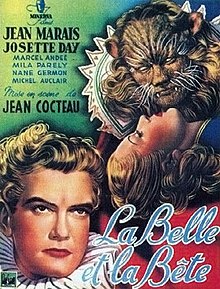
La Belle et La Bete is a French film released in 1946. Written by Jean Cocteau, it is the original Beauty and The Beast, so the story is similar: a young girl takes her father's place as prisoner in a castle with a beast. The film has a surreal mix of elements in the set design, including hands holding candlesticks on the walls and statues that move. What makes La Belle et La Bete even more of an achievement is that all of the effects in the film were done without the use of any technology, instead relying on the skills of makeup artists, set design and costume.

Fig. 1
Much different from the more modern films, "Cocteau uses haunting images and bold Freudian symbols to suggest that emotions are at a boil in the subconscious of his characters." (Ebert, 1999). You can see just how much thought has been put into the set design, from the extravagant costumes to the elegant castle at The Beast resides in. Symbolism is used throughout the film to covey the thoughts of the characters, like spilled pearls or knives which are more than just an object: they have completely different meanings, and certainly shouldn't be taken at face value.

Fig. 2
Despite the erotic connotations throughout the film, there is still the strong sense of fantasy and magic, something which is later replicated in the Disney film. Described as being full of "wonder and mystery" (Brooks, 2014), La Belle et La Bete transports the audience to another world, with magical objects, a huge and beautiful castle, and a heart-warming love story. This is something that the audience of 1946 would have wanted, after all, France has just been ravaged by the Nazis in WW2. This child-like theme continues throughout the film, not only through the beautiful cinematic shots, but the use of sound and music. Although the movie doesn't have a stereotypically 'happy' ending, it still leaves the viewer satisfied at the end of the story. Even though we don't know what will happen to Belle's family, or even Belle herself, there's something about Belle and The Beast just floating away before the end credits that leaves the audience feeling like the story is complete.

Fig, 3
The film is bold and simple, and Cocteau uses his skills to work on "weaving a priceless fabric of subtle images." (Crowther, 1947). La Belle et La Bete, despite its underlying sexual messages, is, at heart, a film about a woman falling in love with an unlikely suitor, full of fantastical props, a beautiful castle, and a story that transports the audience to another world.


Bibliography
Brooks, X (2014). "La Belle et la Bête – review" In The Guardian [online]. Available at: https://www.theguardian.com/film/2014/jan/05/la-belle-et-la-bete-remastered-cocteau-review
Crowther, B (1947). "THE SCREEN IN REVIEW" In The New York Times [online]. Available at: http://www.nytimes.com/movie/review?res=9B03EFD71E3EEE3BBC4C51DFB467838C659EDE
Ebert, R (1999). "Beauty and the Beast" In Roger Ebert [online]. Available at: https://www.rogerebert.com/reviews/great-movie-beauty-and-the-beast-1946


Illustration List
Fig. 1 - https://upload.wikimedia.org/wikipedia/en/thumb/a/a4/La_Belle_et_la_B%C3%AAte_film.jpg/220px-La_Belle_et_la_B%C3%AAte_film.jpg
Fig. 2 - https://brendancultfilms.files.wordpress.com/2011/12/screen-shot-2011-12-06-at-8-54-46-am.png
Fig. 3 - https://i.ytimg.com/vi/36MbmkriK2g/hqdefault.jpg

Sunday, 22 October 2017

Film Review - Alien

Alien, a sci-fi horror film of your nightmares, was made in 1979 by Ridey Scott. It focuses on a cargo spaceship and its crew. When it intercepts a signal from another planet, it discovers a horrifying alien which massacres the crew, slowly killing them one by one. Although the story is simple, it is filmed in such a way that keeps the audience in the edge of their seats.

Fig. 1

Scott is talented at creating suspense in the film. "One of the great strengths of Alien is its pacing. It takes its time. It waits." (Ebert, 2003), and this makes it one of the most gripping movies of all time. Scott knows how to build up tension, using music, camera shots, and most of all, time. He doesn't immediately skip to the action: that would be useless. Instead, he builds up the story slowly, gives the viewer a false sense of security, and then suckers them right in the face with a mutated octopus. Scott makes it feel like you're in the film instead of just watching it: using techniques like shaky camera scenes, dark lighting as the film progresses, and even how the actors talk - sometimes you can't even hear what they're saying. This is all trying to replicate real life, and Scott succeeds in doing this amazingly well.

Fig. 2

Not only is Alien progressive in a film sense, it is socially too. "Some women may be impressed by that actress Sigourney Weaver emerges as the 'hero' of the ordeal and the fact that the computer — even though dispassionate and calculating — is dubbed Mother and has a female voice." (Leogrande, 1979). Weaver is a strong main character and isn't shown as a damsel in distress - she's surviving on her own, and, in the end, she succeeds. She is an intelligent woman and uses her head in time of distress, and that ultimately saved her life. The same can't be said for the rest of the crew - but it wouldn't be a horror movie without a few deaths. It's amazing to see how movies have progressed in this way over the years. The original King Kong, made in 1933, makes incredibly uncomfortable viewing because of the blatant sexism and racism throughout. By contrast, Alien, which was only made a little over 30 years later, has a strong female lead and black characters without any stigma around them at all.

Fig. 3

The progression throughout the movie, starting off in a comfortable spaceship made to humans, and then transitioning to the dark, leaking metal vessel which is more of a home to the alien than the humans. The change in set design through the film is something that's "difficult to beat" (Malcolm, 2009), and a lot of thought has obviously been put into it. Alien constantly keeps the audience on their toes, with the alien constantly changing forms, as well as the set and lighting. The music creates suspense at the right times, and definitely adds to the movie instead of just being something to 'accompany' it, like in some many other films. Overall, Alien is a well thought out and progressive film that builds up tension, leads in to action, and has a satisfying ending of one survivor (and a cat).

Fig. 4

Bibliography
Ebert, R (2003)."Alien". In rogerebert.com [online]. Available at: (http://www.rogerebert.com/reviews/great-movie-alien-1979)
Leogrande, E (1979). "Alien’ tears its way into our nightmares: 1979 review". In nydailynews.com [online]. Available at: (http://www.nydailynews.com/entertainment/movies/alien-tears-nightmares-1979-review-article-1.2648407)
Malcolm, D (2009). "Derek Malcolm's Alien review from 1979" In The Guardian [online]. Available at: (https://www.theguardian.com/film/2009/oct/13/derek-malcolm-alien-review)

Illustration List
Fig. 1 - https://filmdb.showcasecinemas.co.uk/FilmImages/45/1/49192/alien%20one%20sheet%20poster.jpg
Fig. 2 - https://static1.squarespace.com/static/5637f9fbe4b0baa6d85a1011/56382b71e4b0dcf08214a809/577dcd5d20099e0c9bfdda81/1467937667508/alien-1979-por-trás-das-cenas.jpeg?format=1500w
Fig. 3 - https://i.ytimg.com/vi/x1yRMxS7TT8/maxresdefault.jpg
Fig. 4 - https://33hpwq10j9luq8gl43e62q4e-wpengine.netdna-ssl.com/wp-content/uploads/2017/05/alien-1979-2.jpg

Thursday, 12 October 2017

Film Review - 2001: A Space Odyssey

2001: A Space Odyssey (1968), by Stanley Kubrik, is a bold and unusual film that uses incredibly realistic acting and effects from before the time of CGI. The story follows a mysterious monolith through space and time, as well as focusing on modern artificial intelligence going rogue - something humans have always feared.

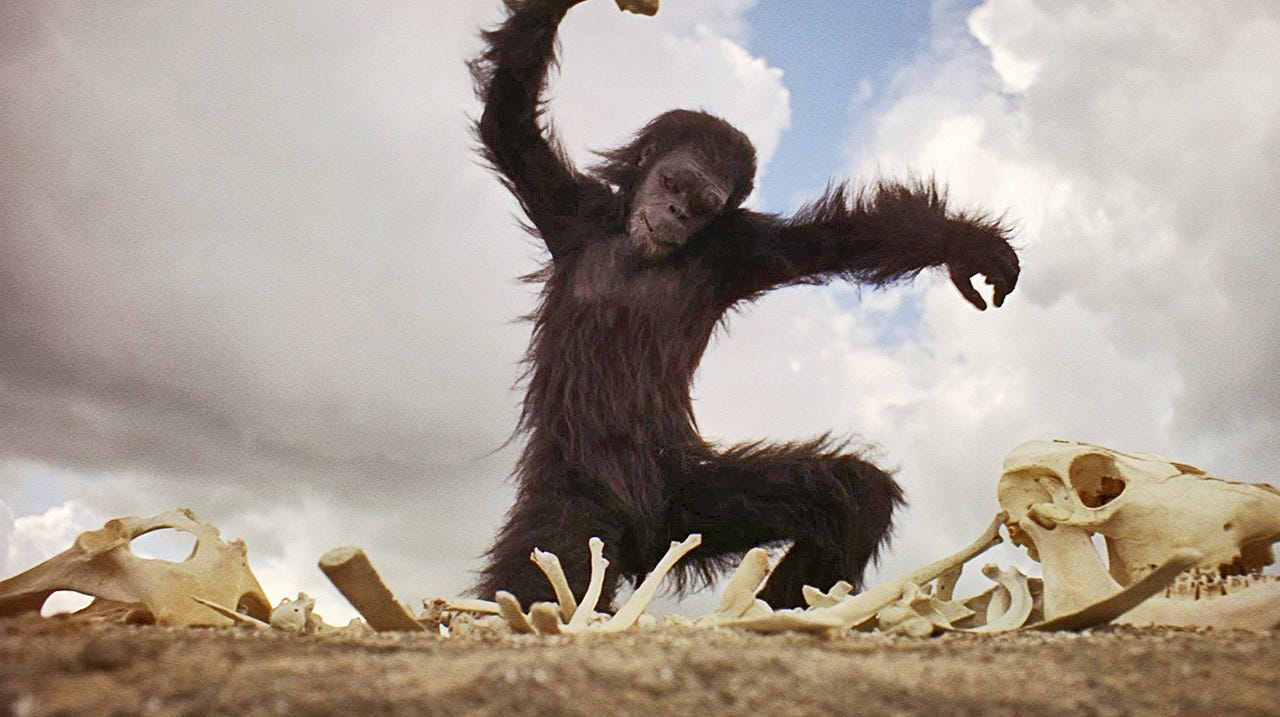
Often described as an "unconventional plot" (Fox, 2011), the film may, at first, be a bit confusing for some when it opens up in the pre-human era, where ape-like creatures discover the monolith for the first time. The apes gradually evolve, discovering new tools and methods of survival. Although this beginning is wildly different from the rest of the film visually, (mainly because it's set on Earth instead of space) the picture is absolutely stunning, as are the scenes to come.

Fig. 1
Directly following the ape scene, the viewer is launched into the future where the monolith has been found in a crater on the moon. The story then continues to fast-forward to 18 months in the future, where a mission has been launched to Jupiter, the planet where the monolith's strange signals are heading towards. However, on this mission the artificial intelligence computer that controls the ship, known as HAL 9000, malfunctions and become creepily human-like, as well as cruel and violent. After HAL murdering four of the crew members on the ship, it is up to the remaining member, Dave, to shut off the AI for good. Dave succeeds in this and continues his mission to Jupiter where he finds an even bigger monolith. From there we are launched into an incredible light show which ends with Dave in a hotel room, quickly ageing in an eerie way, before becoming immortal in space.

The film isn't fast-paced: in fact, it's exactly the opposite. Kubrick takes his time to make beautiful scenes, which makes the movie feel like a work of art rather than a film. Although the story is, at times, hard to understand, Kubrick more than makes up for it with the stunning visuals. The story in 2001 is Kubrick's own; he doesn't embellish it or make it more 'mainstream' to please other people, and that is probably a big contribution to the success of the film. It isn't made to conform to other people's standards, it's made to stand out and be different.

Fig. 2
Kubrick has been more than meticulous about the film's appearance. He often uses symmetry and one-point perspective to make his shots look amazingly balanced. Not only this, but the use of music in the film really adds to it, using a range of classical pieces to describe different atmospheres. The music also makes up for the lack of speech as "the first spoken word is almost a half hour into the film, and there's less than 40 minutes of dialogue in the entire film" (Dirks, no date). Although the characters don't say much in the film, it's still obvious what they're doing and why, and this is all described through set design, acting, costume and music. It's amazing how Kubrick has managed to make a scene 'talk' without actually having any character physically speaking.

Fig. 3
At the end of the film, it is a lot more confusing, especially during the psychedelic scene that lasts for just under 10 minutes, followed by the slightly puzzling scene in the hotel/bedroom. "The film did not provide the clear narrative and easy entertainment cues the audience expected. The closing sequences, with the astronaut inexplicably finding himself in a bedroom somewhere beyond Jupiter, were baffling." (Ebert, 1997). Even though it can be difficult to understand, one of the main points is that it really makes you think about the story, what it means, and why the film was made in this way. 2001 really pulls attention to itself not only by its amazing visuals, but also by its unconventional and original story, which is something that not many films can do.

Fig. 4

Bibliography
Fox, K (2011). "My favourite film: 2001: A Space Odyssey". In The Guardian [online]. Available at: (https://www.theguardian.com/film/filmblog/2011/dec/12/favourite-film-2001-space-odyssey)
Dirks, T (no date). "2001: A Space Odyssey (1968)". In Filmsite [online]. Available at: (http://www.filmsite.org/twot.html)
Ebert, R (1997).  "2001: A Space Odyssey". In Roger Ebert [online]. Available at: (http://www.rogerebert.com/reviews/great-movie-2001-a-space-odyssey-1968)

Illustration List
Fig. 1 - https://cdn-images-1.medium.com/max/2000/1*v3Fxrk0rzkuyD_R0VyhBVA.jpeg
Fig. 2 - https://nonamemovieblog.files.wordpress.com/2012/04/2001-dead-room.jpg
Fig. 3 - https://i.pinimg.com/originals/68/e5/d7/68e5d7737321931f486530ee5832d2c3.jpg
Fig. 4 - https://cmsplatypus.gothamist.com/gothamistgallery/2017/3/21/f3c592375img_0018-13-jpg.jpeg


Film Review - King Kong

King Kong, directed by Merian Cooper in 1933, is definitely an interesting watch. The behaviour of society at the time is captured in this film very well; the sexism and racism is very prominent. The general plot of the film is one that most people are probably familiar with: Anne, the main protagonist has captured the eye of the giant ape King Kong, who is then captured and taken to New York City where he wreaks havoc until killed. What is more interesting than the plot, however, is the way the characters act, and more importantly, why.

Fig. 1
As stated in many reviews, "modern viewers will shift uneasily in their seats during the stereotyping of the islanders in a scene where a bride is to be sacrificed to Kong" (Ebert, 2002). Not only this, the stereotypy of Anne as a screaming damsel in distress is also something that is quite unsettling to a modern audience. It is interesting to see how stereotypes have changed, and also slightly horrifying to see how to world used to be stuck in rigid views of how specific genders or races should act.

Despite the blatant sexism and racism in the film, it was still a ground breaking picture of its time, and has now spawned many sequels and remakes. Described as "ahead of its time" (Haflidason, 2001), the special effects were something that not many people had seen before. In 1933 the film industry was still developing, and technology was moving slowly forwards. Although we may find it silly now, it was a film that was so life-like back then that it had people on the edge of their seats.

Fig. 2
At the end of the film, where Kong is taken back to New York, he is "exploited for profit" (Dirks, no date), and treated more as a slave than a living thing. The cruelty of the photographer, Denham, bringing Kong back in this way often isn't recognised, and can also be compared to real-life slavery in the 1930's. There is a bitter sweet feel about the ending, as although the terror on New York has stopped now Kong is dead, he was also just an animal taken from where he belonged and thrust into a whole new environment, somewhere he didn't want to be. Being chained up and displayed in front of paying people against his will, there is something sad about King Kong, where this animal has been killed for simply wanting to go home.

Fig. 3
Bibliography
Ebert, R. (2001). "King Kong". In: RogerEbert [online] Available at: (http://www.rogerebert.com/reviews/great-movie-king-kong-1933)
Haflidason, A. (2002). "King Kong (1933)". In BBC Movies [online] Available at: (http://www.bbc.co.uk/films/2001/01/30/king_kong_1933_review.shtml)
Dirks, T (no date). "King Kong (1933)". In filmsite [online] Available at: (http://www.filmsite.org/kingk3.html)

Illustration List
Fig. 1 - http://www.attitudedesign.co.uk/sites/default/files/wp-content/uploads/2011/11/KingKongPoster.jpg
Fig. 2 - https://thenypost.files.wordpress.com/2017/03/kong1933a.jpg?quality=90&strip=all&strip=all
Fig. 3 - https://ianfarrington.files.wordpress.com/2016/07/kk1933.jpg

Monday, 2 October 2017

Film Review - Metropolis

Metropolis (1927), is an ambitious science-fiction film directs by Fritz Lang. It was made seven years after The Cabinet of Dr Calagari, and it's amazing how quickly technology has progressed over less than a decade. Camera shots are more ambitious, compared to Caligari, which has a completely static camera throughout the whole film. The production design is extremely extravagant, with special effects (such as a whole town flooding, or explosions in the undercity) as well as interesting environments which definitely show an influence from Robert Wiene's work in Calagari.

The film begins illustrating the idea of an undercity and an overcity, with the undercity being a place full of the machinery which keeps the luxurious overcity working. The workers in the undercity are treated like slaves, whereas the others in the overcity have a life of relaxation. Maria is the woman that gives the men of the undercity hope, preaching to them in secret, unknown to Joh Fredersen, who is the master of Metropolis. Freder, who is Fredersen's son, decides it's unfair for the people of the undercity to be slaves, and he meets Maria, who shares his ideas. Meanwhile, Fredersen and Rotwang the scientist work together to bring the undercity to its knees. After the conflict between the undercity and the overcity, the film concludes positively, showing both sides resolving their differences and agreeing to work together.

The differences between Calagari and Metropolis are profound, but there are also some similarities. They both make use of warped perspective in their environments. Although Calagari definitely pushes that perspective a lot more, the influence in Metropolis is very obvious, shown by a comparison of shots from the film below.

Fig 1: Metropolis
Fig 2: Calagari 
Described as the "most innovative and influential figure in movie history" (French, 2010), Metropolis has some real-world parallels that reflect the stance of society in the 1920's. Maria is a very sexualised figure in the film, starting off as stereotypically 'pure', before she is replaced by Rotwang's robot, where she is portrayed as incredibly tainted, as shown by a scene where dancing provocatively in front of crowds of men. The fact that the fake Maria has to act in this way to be shown as 'evil' says a lot about the view on women in the 1920's. Not only this, but there is also a reflection of political topics: in the film, the city is led by just one dictator, Fredersen, who doesn't necessarily know of the best way to lead this society he has created, evident by the fact that "Fredersen out-and-out encourages an angry mob to destroy his own city" (Abrams, 2010). This seems slightly similar to how Germany has been led in the past, where the mass has been controlled by a few select people.

Fig. 3
Although there are a lot of parallels between Calagari and Metropolis, "Lang develops this story with scenes of astonishing originality" (Ebert, 1998). It has a bit of everything in it: robots, explosions, action, and a dystopian, futuristic city. Although the story can be a bit confusing at times, especially with some lost footage, the effects and environment of the movie are certainly very stunning, and Metropolis was, without a doubt, one of the most influential (and expensive) films of its time.

Bibliography
Abrams, S. (2010). "Metropolis". In: slantmagazine [online] Available at: (https://www.slantmagazine.com/film/review/metropolis)
Ebert, R. (1998). "Metropolis". In rogerebert [online] Available at: (http://www.rogerebert.com/reviews/great-movie-metropolis-1927)
French, P. (2010). "Metropolis". In: The Guardian [online] Available at: (https://www.theguardian.com/film/2010/sep/12/metropolis-fritz-lang-review)

Illustration List
Fig. 1 - http://www.uow.edu.au/~morgan/graphics/metro94.jpg
Fig. 2 - http://www.cinemas-online.co.uk/images/caligaristage.jpg
Fig. 3 - https://i.pinimg.com/736x/b6/78/ec/b678ece88e7303022b4e38212c883aae--metropolis--fiction-movies.jpg

Wednesday, 20 September 2017

Film Review - The Cabinet of Dr. Caligari

The Cabinet of Dr. Caligari (1920) is a dark and enthralling film about a somnambulist, created by Robert Wiene. Despite it's age, the plot, environment and acting are to the standard of a modern day film, making it one of the most prominent movies of its time.

Fig. 1

Described by The Guardian as "a timeless classic, and a visual archetype" (Kermode, 2014), the plot follows Franzis, a young man who investigates his friend's brutal murder and discovers it was the work of a madman, Dr. Caligari, who manipulates a somnambulist, Ceasre, to commit crimes for him. However, there is a twist at the end of the film that reveals it is in fact Franzis who is the madman, obsessed with Dr. Caligari's work. Franzis has devised this whole world around the story of Caligari using the characters around him in the insane asylum where he resides, with the director of the asylum assuming the role of Caligari himself.

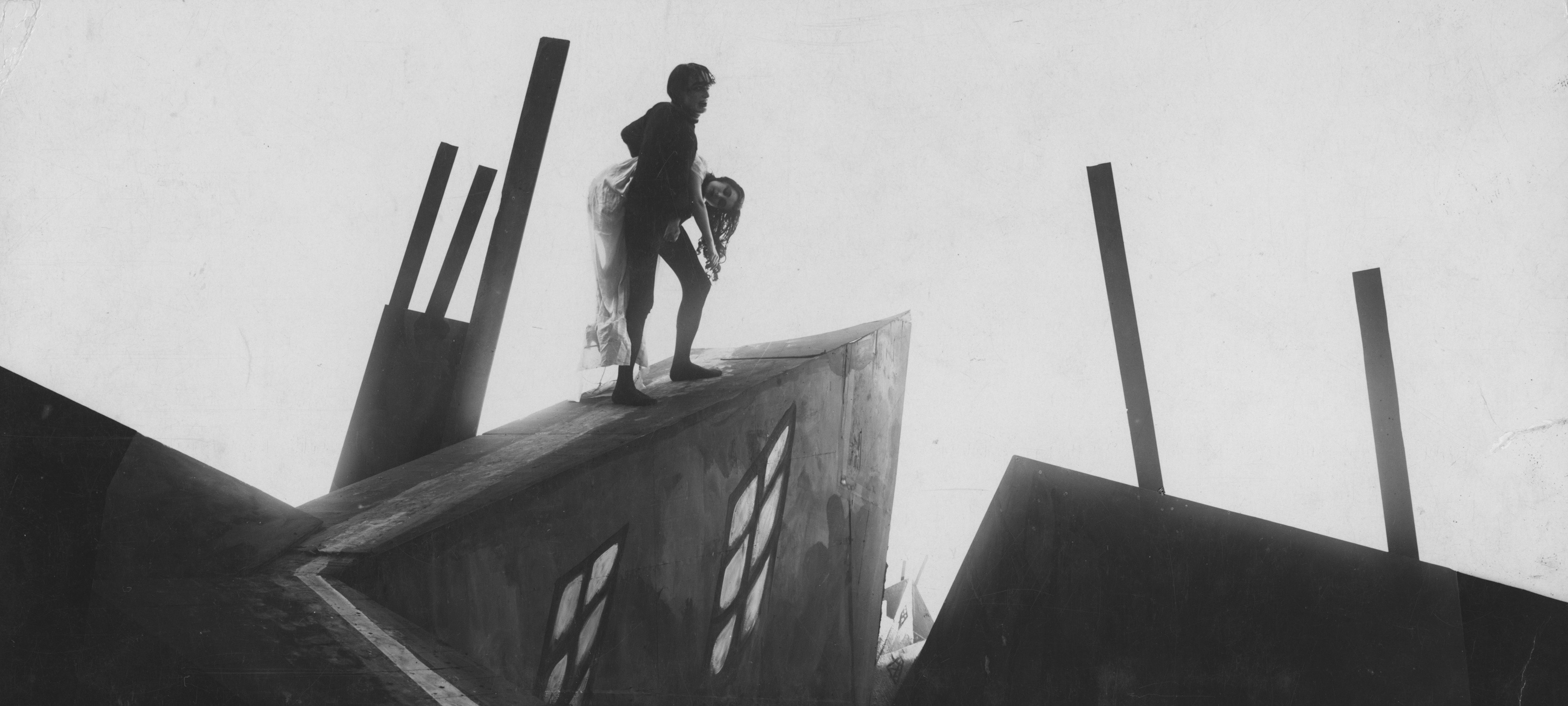
The art style in this film reflects the plot amazingly well; where the use of broken perspective creates an otherworldly, almost nightmarish experience. In a review by Roger Ebert of The Cabinet of Dr. Caligari, the scene design is described as "a jagged landscape of sharp angles and tilted walls and windows, staircases climbing crazy diagonals, trees with spiky leaves, grass that looks like knives." (Ebert, 2009). This is a very accurate description of the unique art featured in the film, and Wiene has done this to show we were in a broken place all along: in the head of a madman. This foreshadowing, which lead to the viewer finding out that the story was just the wild fantasies of Franzis, is an excellent example of how the art in the film mirrors the story perfectly.

Fig. 2

There is no denying how influential The Cabinet of Dr. Caligari was in its time, where films used to be a very accurate depiction of real events. The movie is a stark contrast to this stereotype, with the acting and environment being used as a tool to enhance the story, to tell the reader that all isn't well in this world (in Franzis' head), instead of simply showing things as they would actually appear. In a review by Jacob Oller, he accurately sums this up by stating: "this film is here to unnerve you without gunfights, car chases, or any of that ilk. This is creeping discomfort, crawling in your trapezoidal windows and haunting your dreams." (Oller, 2017).

The Cabinet of Dr. Caligari is a film that represents both the unrest in Franzis' mind, as well as having a real world reflection on World War 1. The broken perspective, as well as the story, showing the control that Caligari has over Ceasre the somnambulist, can be likened to the extreme control the government had in the German society, in a position of power over helpless people. Wiene has created a very significant masterpiece that has influenced many films to follow, and was a prominent factor in the making of movie culture as it is today.


Bibliography
Oller, J. (2017). "Psychological Horror Has Been A Thing Since ‘The Cabinet of Dr. Caligari". In: Film School Rejects [online] Available at: (https://filmschoolrejects.com/psychological-horror-thing-since-cabinet-dr-caligari) [Accessed 21 Sep. 2017].
Kermode, M. (2014). "The Cabinet of Dr Caligari review – a timeless classic and a visual archetype." In: The Guardian [online] Available at: (https://www.theguardian.com/film/2014/aug/31/cabinet-dr-caligari-review-mark-kermode-timeless-classic) [Accessed 21 Sep. 2017].
Ebert, R. (2009). "The Cabinet of Dr. Caligari Movie Review" (1920) In: The Guardian [online] Available at: (http://www.rogerebert.com/reviews/great-movie-the-cabinet-of-dr-caligari-1920) [Accessed 21 Sep. 2017].

Illustration List
Fig. 1 - https://homemcr.org/app/uploads/2011/04/The-Cabinet-of-Dr-Caligari-3-e1412607754507.jpg
Fig. 2 - 
https://upload.wikimedia.org/wikipedia/en/e/e2/The_Cabinet_of_Dr_Caligari_Holstenwall.png